Lead Designer · 40% → 80% Booking Completion

Online Booking Tool for Auto Shops
I led the redesign of Tekmetric's online booking tool, the front door of a shop's customer acquisition funnel. Within 12 months, booking completion doubled from 40% to 80%.

Role

Senior Product Designer

Timeline

2 phases, 12 months

Platform

Web and mobile web

Team

PM, data team, engineering

Stakeholders

Product and engineering leadership

What I owned

Contextual research with shop owners and their customers, personas and journey maps, making the case for a redesign over a rebuild, the service design across shop systems, and both phases of the booking experience.

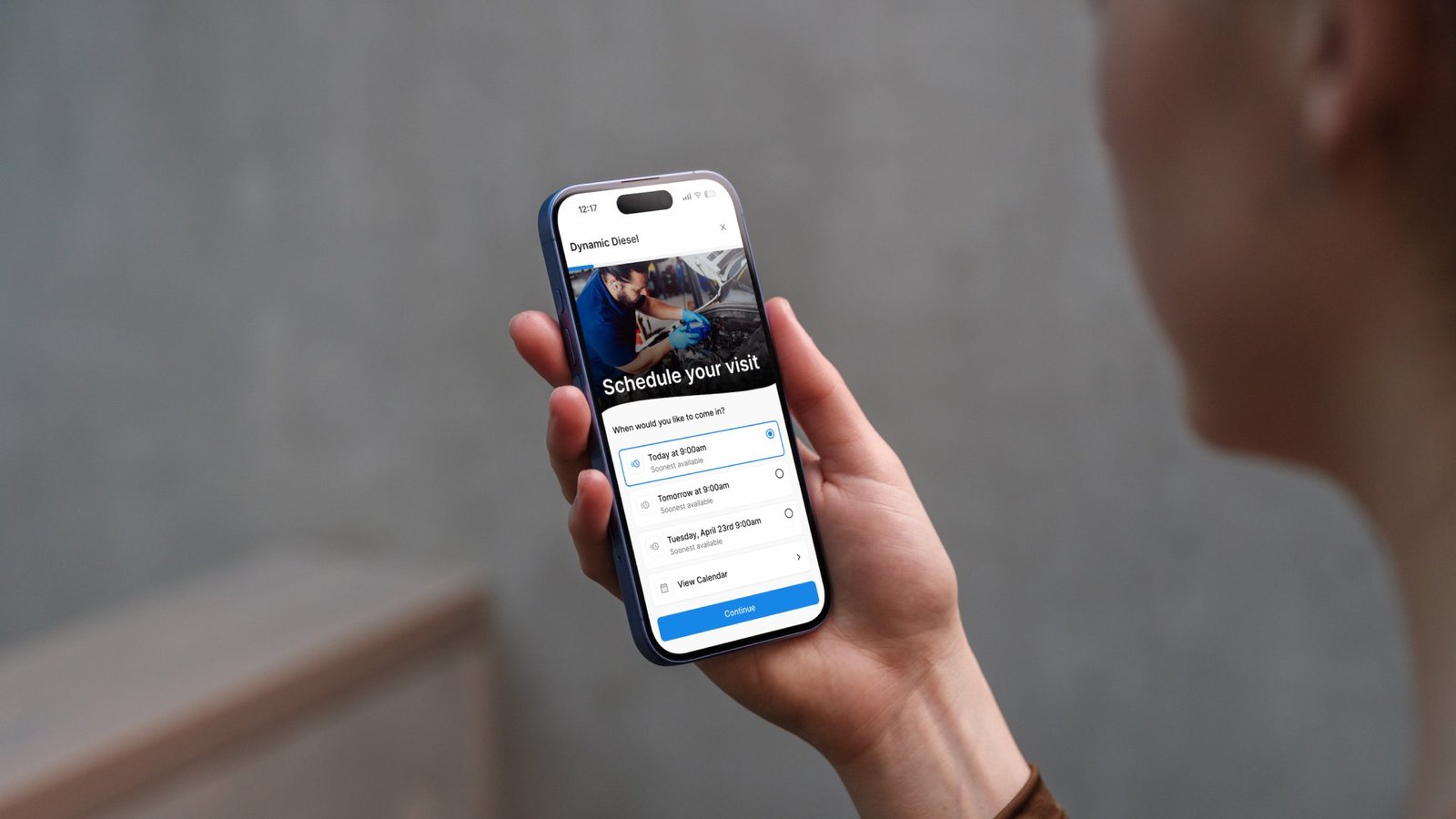
The redesigned booking tool on a phone: Schedule your visit, with the soonest available times
Problems with Booking

Why Customers Weren't Booking

Shops lived on phone calls and disconnected third-party tools, which caused overbooking and gaps in the schedule. The booking tool Tekmetric acquired solved part of that, but only 40% of customers who started a booking finished it.
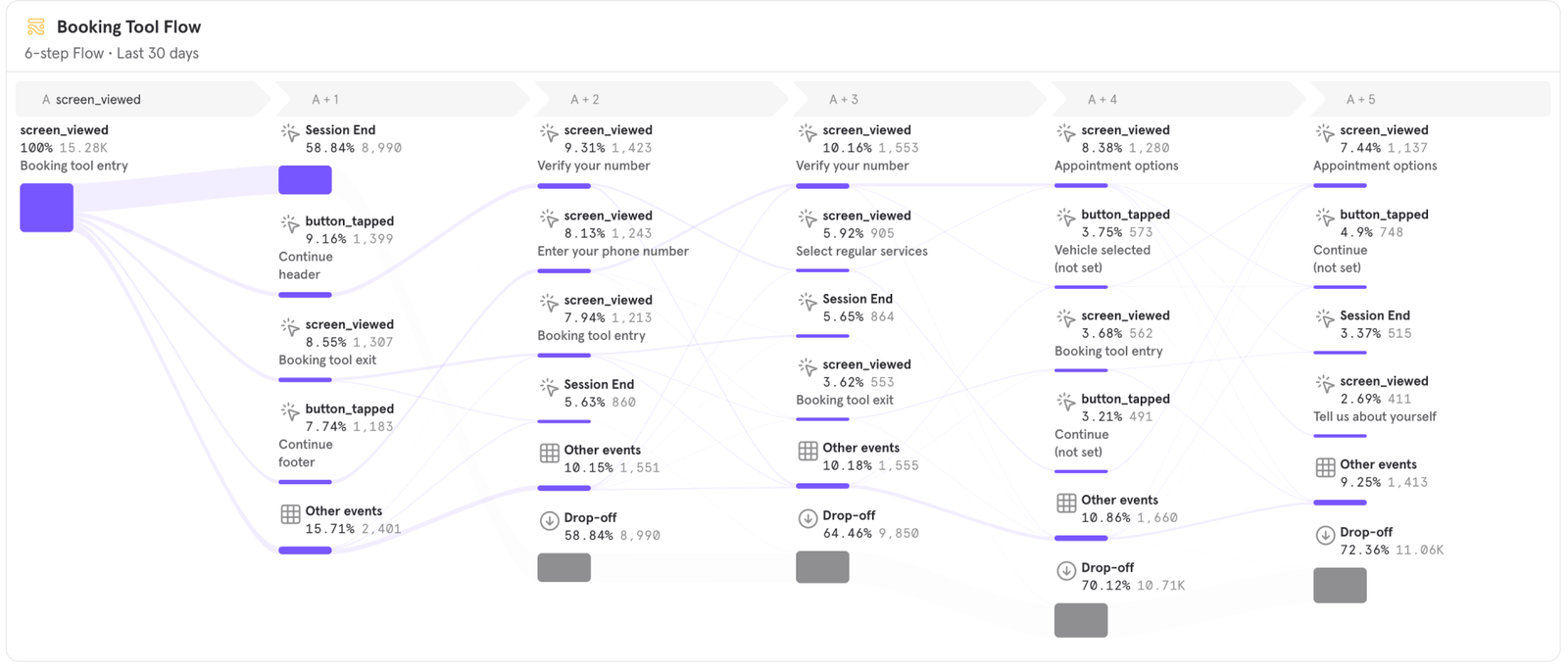
Booking tool flow analytics over 30 days: 58.84% of sessions ended right after the booking tool opened
The need was clear. Drivers want to book online, often when no one is at the shop to pick up the phone, and shops that used the tool were already earning more from it. With customers worth thousands of dollars over the years they stay, every abandoned booking was a lost long-term customer.

‍Business goal: Turn more booking visits into appointments, and grow Tekmetric from shop management system to auto repair platform.

‍Success metric: Reach a 50% booking completion rate within 6 months of launch, generating $1.3M in new revenue.

Metric

Baseline

Target

Booking completion

40%

50% in 6 months

Monthly shop revenue

New

$5,000

Business revenue

New

$1.3M

Booked appointments

9,336

Grow with completion

Research: Finding where bookings broke

"When I click on the button, I expect a calendar of available appointments."
I ran contextual interviews with shop owners and with their customers, using ethnographic methods to see how people actually book a repair and how shops actually take those bookings. Product analytics showed where people left: more than half ended their session right after opening the tool. Personas and journey maps for each person who touches a booking showed where customers lost confidence.
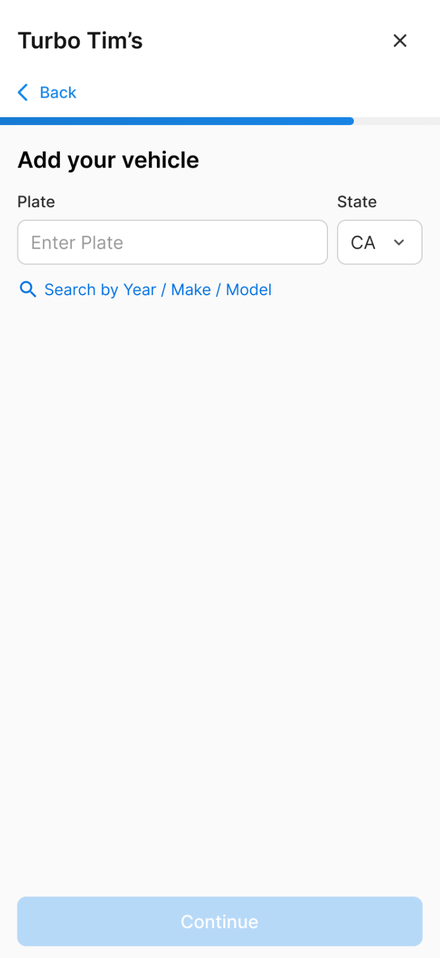
Add your vehicle by plate and state
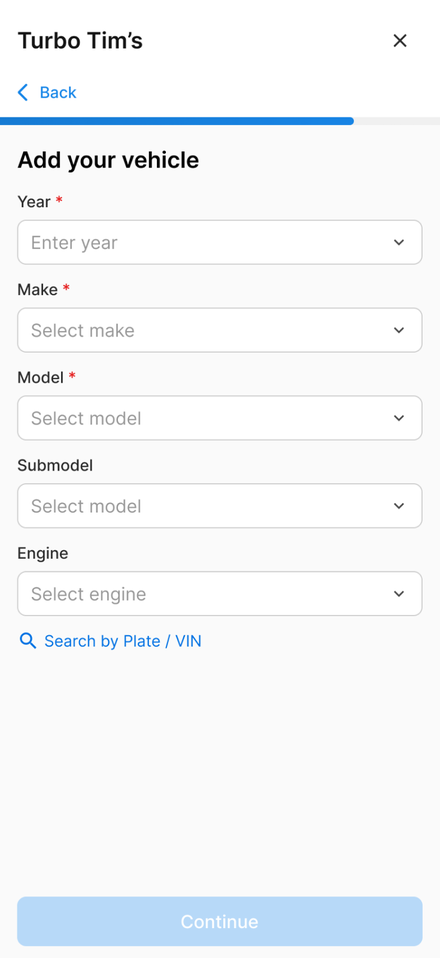
Add your vehicle by year, make, model, submodel and engine
Add your vehicle · by plate, or by year, make and model

Insight 01

58.84% of sessions ended at the first step, before customers saw a time

Insight 02

Customers expect a calendar first, not a list of questions

Who touches a booking

Shop owner

Wants fewer tools and more bookings that convert to loyal customers

Sets up the tool, puts it on the shop website, monitors results

Service admin

Wants one place to manage all appointments, with no phone calls

Manages repair work, maintains the tool, builds the invoice

Customer

Needs to book a repair quickly, especially when something goes wrong

Has car trouble, searches for a shop, books, brings the car in

Where it broke

Owners and admins needed the tool to fit their schedule. Customers needed to get to a time fast. The old flow served neither, and customers paid for it by leaving.

Phase 1

Booking Tool Set Up

A booking is only as good as the schedule behind it. Before changing the customer flow, I mapped the service behind a booking: how shops run their schedules, what data each booking needs, and how a request is handed from the customer to the shop. The first phase connected setup directly to Tekmetric's calendar, so shops could take appointments the moment they turned the tool on.

How might we

Create a setup experience that integrates directly with Tekmetric's calendar so shops can take appointments immediately?

What a booking touches

01 · Customer

Has car trouble and finds the shop online

02 · Booking flow

Redesigned

Collects what the shop needs to accept the job

Need Service, vehicle, time, contact

03 · Tekmetric calendar

Fits the booking into the shop's real availability

Service groups

Technicians

Bays

Hours

04 · Service admin

Handoff

Picks up the appointment and the repair

No phone call, no re-entering details in another tool.

Phase 2

Focusing on the Drivers' Experience

Phase 1 fixed the shop side. Phase 2 went after the half of customers still leaving. I went back to drivers and shop owners and turned what they said into four principles for the flow.

Problem reframe

"If it brings in more customers, I don't mind collecting more info after they've made the appointment." Shop owners would trade quantity of data for quantity of appointments.

Tradeoffs

We explored a 2-step flow to make booking as short as possible, but engineering constraints meant the system needed more information upfront. Instead of a long form, I grouped related fields and used progressive disclosure, so the flow still felt short while the shop got what it needed.

Decision

What We Traded

Why

Grouped fields and progressive disclosure instead of a 2-step flow

The shortest possible flow

Engineering needed more information upfront; grouping kept it feeling short

Optional vehicle details

Complete vehicle data on every booking

Owners would rather get the appointment and collect details after

Redesign instead of a one-to-one rebuild

A shorter roadmap

The data showed a rebuild would keep losing 60% of customers

Impact

Booking completion doubled, from 40% to 80% within 12 months. Shops booked 13,486 appointments, up from 9,336, and monthly shop revenue from the tool grew to $7,800. The booking tool brought in $2M in business revenue.

Metric

Post 6 months

Post 12 months

Booking completion

40% to 50%

50% to 80%

Booked appointments

9,336 to 10,374

10,374 to 13,486

Monthly shop revenue

$6,000 (goal $5,000)

$7,800

Business revenue

$1.5M (goal $1.3M)

$2M

100%50%0Phase 1Phase 2Before: 40%Post 6 months: 50%Post 12 months: 80%40%50%80%Before6 months12 months
Booking completion rate, from the acquired tool to 12 months after launch.

Learnings

What I learned: Data made the case that research alone couldn't. Pairing the drop-off numbers with what we heard in interviews moved leadership from a rebuild to a redesign. Meaningful improvements don't happen overnight: it took two phases to get from 40% to 80%.
‍What I'd do differently: With more time, I'd add personalized booking recommendations based on the customer's vehicle type and service history.
‍Next steps: Build a deeper understanding of shops' customers, and keep differentiating from competitor booking tools.
×
Return to Home
Product Led Growth →